Role
Engineering Intern (paid)
A 7-week paid engineering internship at Novelis, the world's largest producer of rolled aluminum, on a team building a robotic system to replace a slow, manual production step.
Novelis is the world's largest producer of rolled aluminum and the largest aluminum recycler, supplying the automotive, beverage-can, and aerospace markets from its Atlanta headquarters.
I joined an engineering team building a robotic system to automate the production of lanolin-based grease packs used in the aluminum manufacturing process, a step that was being done by a slow manual workflow. The goal: a repeatable, higher-throughput build.
My contribution is to the mechanical design and the process-automation logic that makes the system consistent and fast enough to replace the manual process.
Replacing a manual step is not about building the most impressive machine. It is about consistency. A person doing the same task by hand drifts: slightly different timing, slightly different pressure, the occasional miss. The output varies, and so does the throughput.
A machine has to hit the same result every cycle, for a full shift, without someone watching it. That requirement pushes the design toward simple, robust motion and predictable handling rather than cleverness for its own sake. It is why throughput and repeatability drive the mechanical choices here more than anything else.
My competition robotics background is the same engineering at a smaller scale and a shorter clock. This is that discipline applied to a process that has to run reliably for hours, which is exactly the part I wanted to learn.
The mechanism is modeled in CAD on Onshape. These are screenshots straight from the model, the canister that holds the grease pack, the actuating arm that drives the process, and the head that handles the lid.
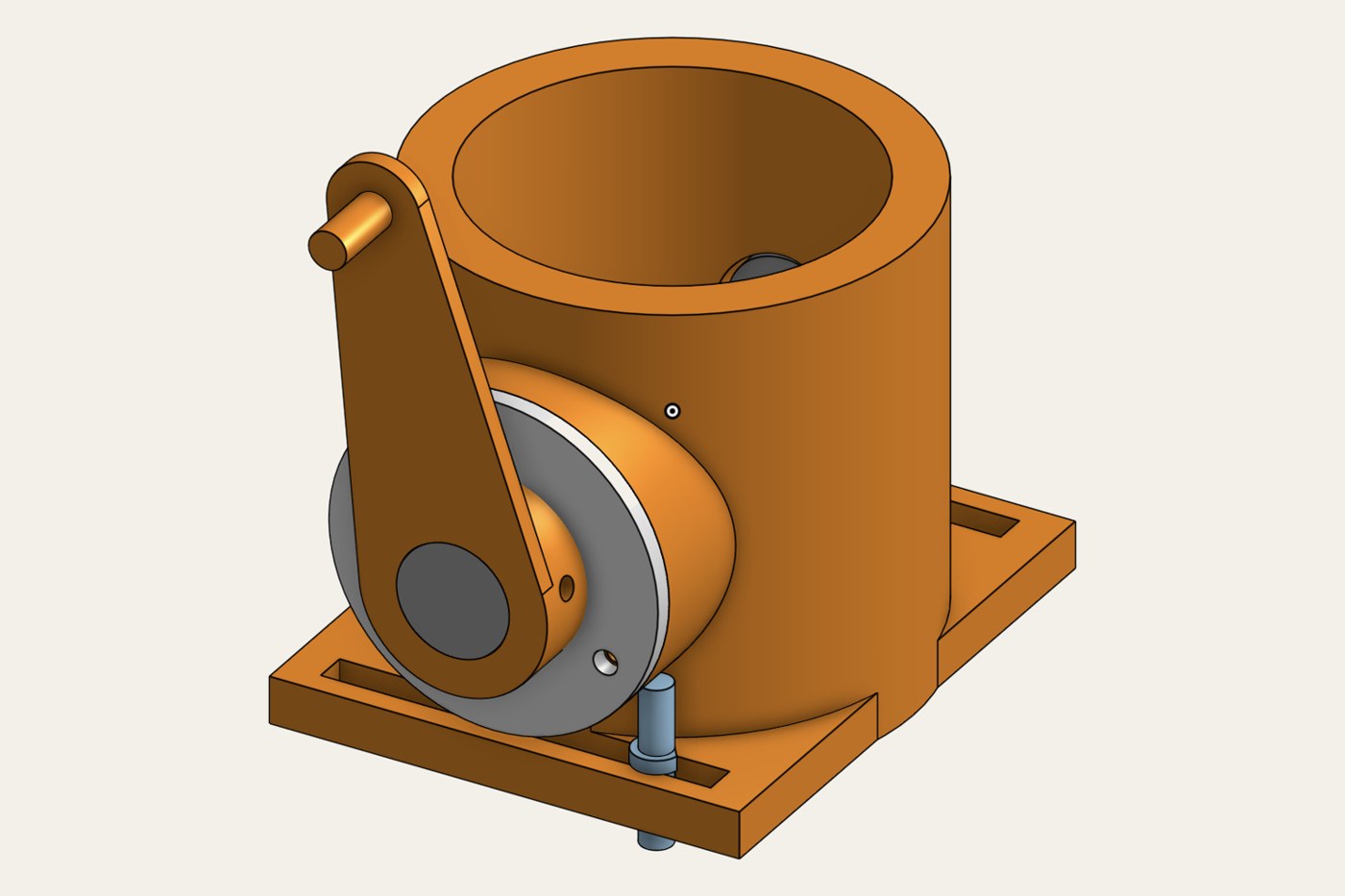
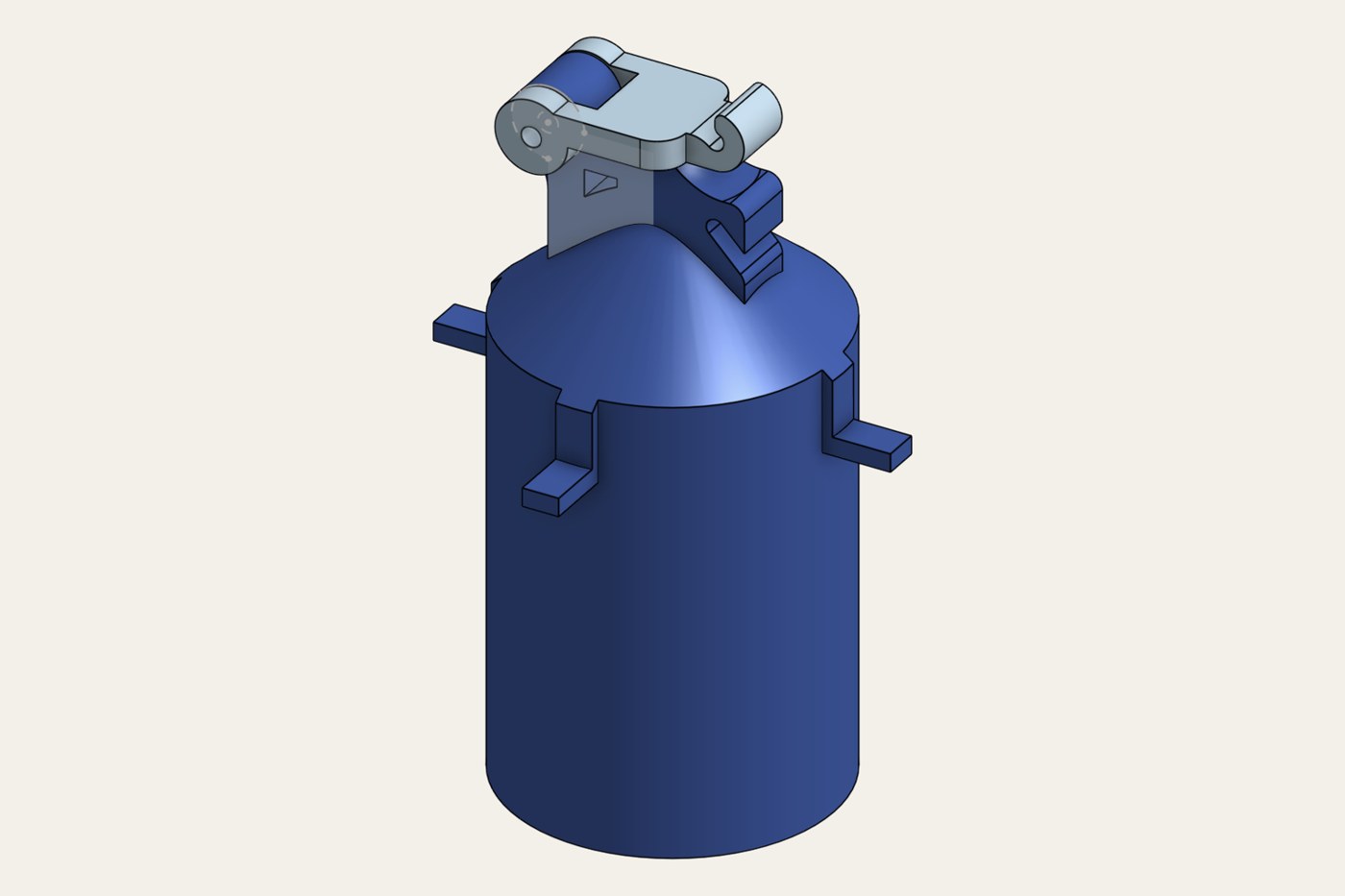
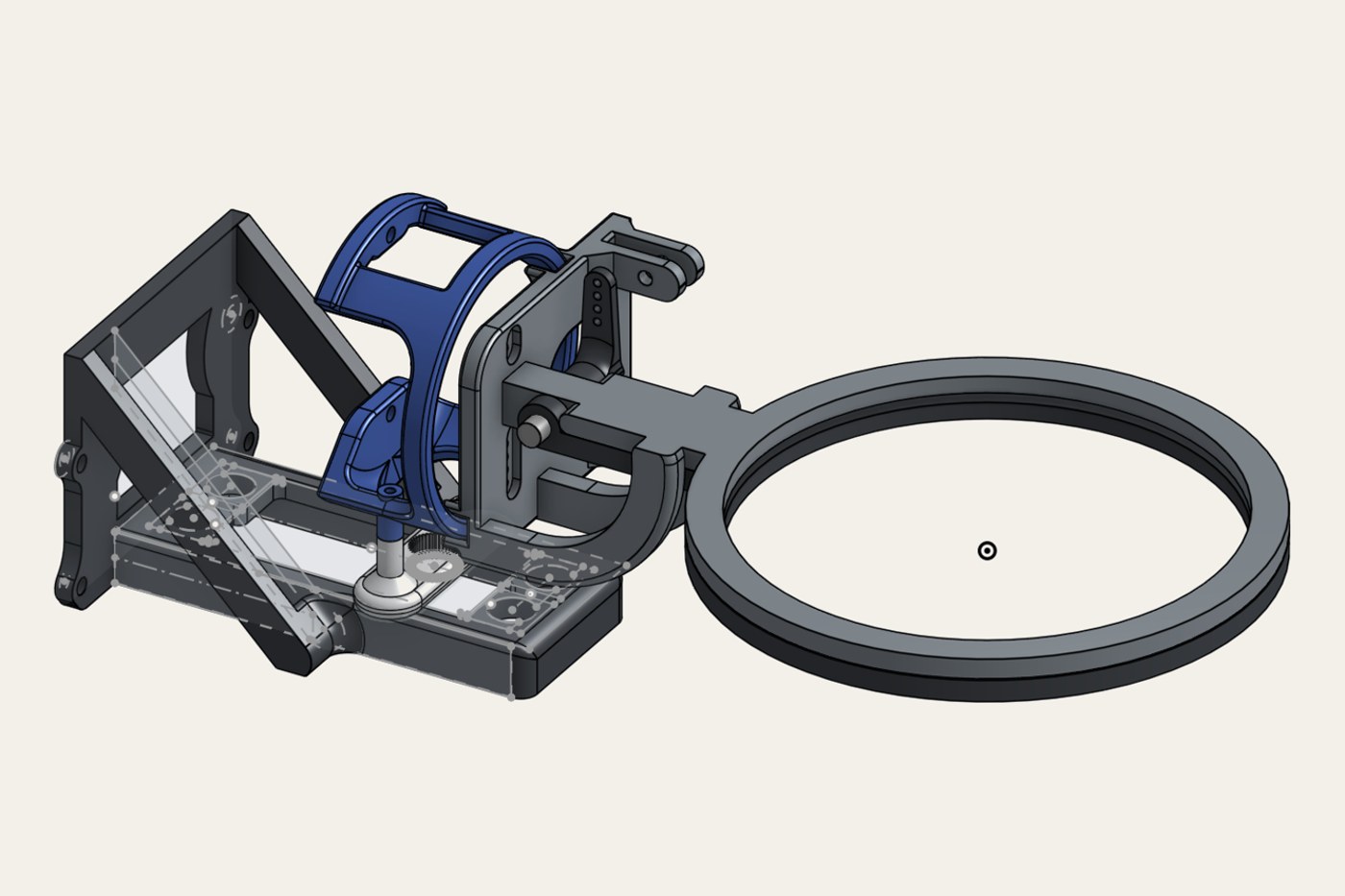
My robotics background is competition-scale; this is the same engineering at industrial scale, where a design has to run reliably for a shift, not a two-minute match. The constraints are different, throughput, repeatability, safety, and maintenance all become first-class concerns.
It's also a reminder that automation is mostly about removing the slow, error-prone manual step in front of you, not about the most impressive robot. The win is a repeatable build that a plant can actually depend on.